

Introduction:
In the dynamic landscape of pharmaceutical marketing, the use of direct-to-consumer (DTC) advertisements explores a contentious debate between profit-driven motives and genuine public health concerns. From faith-based treatments in ancient times to plant-based medicine in the medieval and Renaissance periods, therapeutics and their related marketing strategies have evolved over the years (Module 5, Section 2). This change is attributed to technological advancements that have defined the modern era of medicine. Direct-to-consumer (DTC) advertising is a marketing strategy where pharmaceutical companies directly target advertisements towards patients, rather than medical professionals. These methods challenge the critical moral framework of healthcare, particularly within pharmacology, which is the study of medicine and its interactions with biological systems. Traditionally, pharmacology has relied on healthcare professionals to evaluate and prescribe medications based on patients’ needs and health history. However, DTC advertising disrupts this, directly targeting consumers, and potentially neglecting the expertise of medical professionals. In the modern era, direct-to-consumer advertising has become a social issue, with some people supporting it, and others opposing its use (Module 5, Section 4). The following video explains direct-to-consumer advertising, and summarises both perspectives that I’ll be considering:
Social Issues And Ethical Dilemmas Associated With DTC:
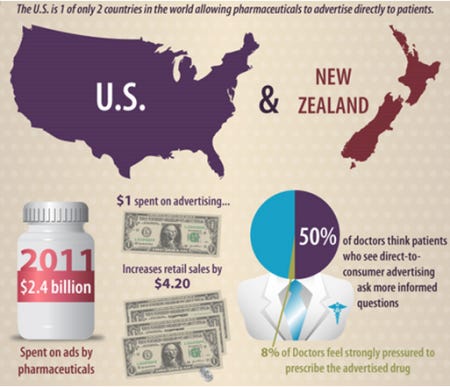
The rise of direct-to-consumer advertising has ignited a profound social issue marked by the complex interplay between its role as an information distributor and source of income for pharmaceutical companies. This dispute introduces ethical implications globally, as the United States and New Zealand are the only countries that permit DTC advertising (Module 5, Section 1). Despite this, there’s still a lack of regulatory oversight by the United States Food and Drug Administration (FDA). Although the FDA outlines requirements for responsible DTC advertising, this regulatory framework is often neglected, since the pharmacy sector is private, and pharmaceutical companies strive to maximise profits through DTC advertising (The Impact of Direct-to-Consumer Advertising, n.d).
Is It For The Patients? – Empowering Informed Decision-Making:
Advocates for direct-to-consumer advertising emphasise its role in making essential drug information easily accessible (Duffin, 156).

In recent years, companies like AbbVie and Pfizer relied on direct-to-consumer advertising to disseminate key information about COVID-19 vaccines (Madan, 2021). These companies even reached me through social media, teaching me about vaccines and their availability, empowering me to make my own informed decisions. Aside from COVID-19 advertisements, various other pharmaceutical companies, like GlaxoSmithKline (GSK), create informative advertisements to help potential consumers better understand health conditions. Additionally, proponents argue that increased awareness of medications prompts more frequent visits to healthcare professionals, and also nurtures improved patient-physician engagement (Ventola, 2011). Direct-to-consumer ads inspire individuals to seek medical advice, which can also lead to the discovery of health issues beyond the initially advertised ones (Module 5, Section 4).
Is It For The Profit? – Ethical Implications:
Direct-to-consumer advertising, while ostensibly intending to inform the public, converges ethical boundaries, as companies can inadvertently lead patients to misuse certain drugs (Wosinska, 2005). Disease mongering is a concern in direct-to-consumer advertising, which is when exaggerated marketing convinces individuals to use certain unnecessary drugs (Module 5, Section 4). Companies often frighten consumers by exaggerating small conditions to make people feel obliged to purchase their products. Given the fundamental framework of healthcare, to prevent harm, I believe DTC advertising to be unethical as it causes unnecessary paranoia– how does this help society?
Direct-to-consumer ads also lack the nuanced medical judgement and personalised care provided by experienced doctors (Kenton, n.d). Notably, Robert Shmerling, a rheumatologist at Harvard stated,
“Patients who ask me about drug ads are often surprised to hear about important information the ads left out” (Shmerling, 2022).
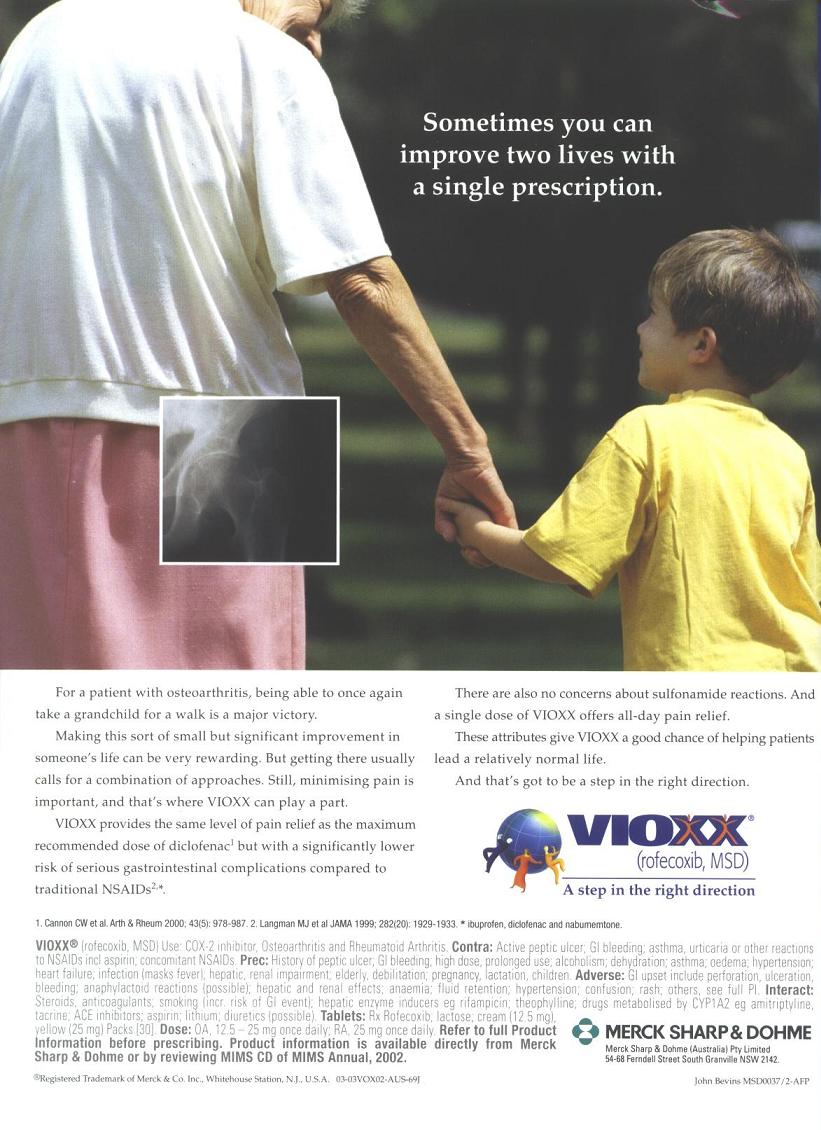
Direct-to-consumer marketing strategies like evergreening are effective in selling products to consumers; however, they’re often associated with false or incomplete advertising (Module 5, Section 4). While these ads might be informative, what good do they do if they share biased or false information? Rather than patients becoming active and informed decision-makers, DTC makes them reckless, causing them to make impulsive purchases. For instance, figure 3 shows a drug advertisement for Vioxx, which discusses exaggerated risks of gastrointestinal bleeds associated with traditional Nonsteroidal Anti-Inflammatory Drugs treatments, creating a false narrative that Vioxx was a safer alternative (Module 5, Section 4). This was misleading, as Vioxx was later linked to thousands of deaths due to strokes (Duffin, 156). This shows how the current lack of regulatory structure concerning DTC can jeopardise patient health and safety.
Concluding Thoughts:
Given direct-to-consumer advertising’s persuasiveness and the lack of comprehensive regulations, global prohibition of direct-to-consumer ads is warranted. The potential for the pervasion of misinformation poses risks, especially in our current social media-driven era. Restricting direct-to-consumer advertising ensures that consumers are shielded from incomplete or biased information, prioritising public health over pharmaceutical companies’ profits. While direct-to-consumer advertisements claim to provide accessible and reliable information, they manipulate the truth to promote their products. Personally, I am against direct-to-consumer advertising, given its potential to cause societal harm—an approach diametrically opposing medicine’s altruistic core.
 Raise The Bar